
Youth athletes
Growth injuries and long-term athletic development
Young athletes are not smaller adults. Growth, maturation and changing training loads place unique demands on developing bodies — so they need a plan built for that, not a scaled-down adult programme.
Growth-injury assessments £60 (50 min) · Bespoke 12-week LTAD plan £395
Knee pain in growing athletes
Osgood-Schlatter type pain at the front of the knee, typically in a growth spurt alongside a jump in training volume.
Heel pain
Sever's type heel pain, common in footballers, netballers and runners aged roughly 9 to 14.
Back pain in young athletes
Throwers, gymnasts, rowers and fast bowlers, where technique and volume both need looking at, not just the sore area.
Too much, too often
Athletes split across school PE, club sport, county squads and a growth spurt at the same time.
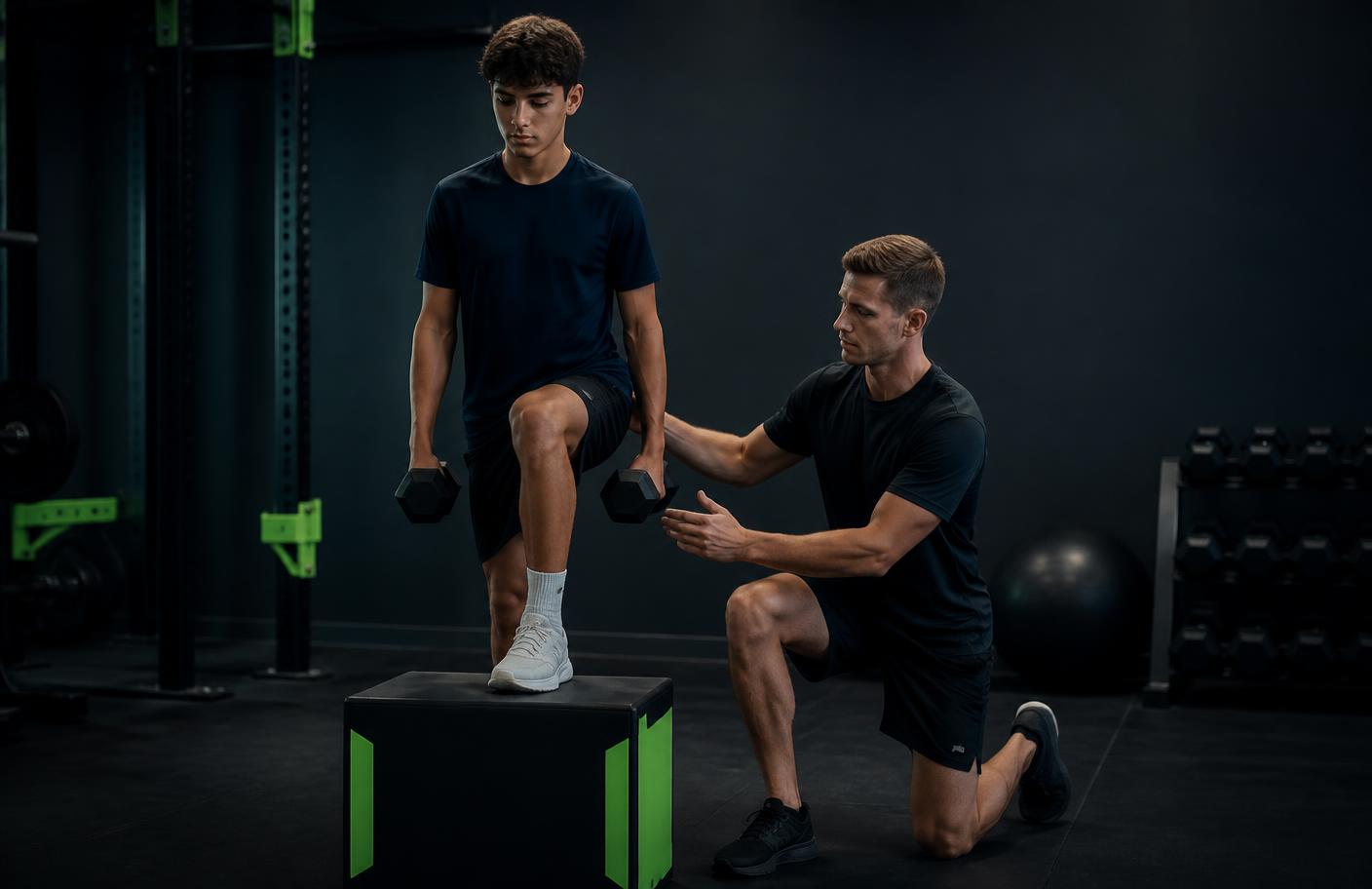
Load, not just tissue
Most growth-related pain is a load problem spread across school PE, club sport and county squads. We map the whole week first, then adjust it so they keep playing wherever that is safe — total rest is rarely the answer.
Matt has spent years in elite adolescent sport, including a prominent local college and England Rugby U18 environments, where growth-related injury and load management are routine rather than occasional.
Parents and coaches included
Clear explanations of what is happening, what is safe and what to expect next, so the athlete hears the same message from home, school and club.
Book an assessmentLong-term athletic development
A bespoke 12-week LTAD plan
For young athletes who want to develop properly rather than firefight injuries: a structured 12-week block built on their maturation stage, their sport and their actual weekly load.
£395
Bespoke 12-week plan including profiling, the written programme, review points and a week-12 retest with a shareable report.

Weeks 1-2
Profile and screen
Maturation and growth status, movement screening, ForceDecks strength and asymmetry testing, and a full map of the training week across school and clubs.
Weeks 3-6
Foundations
Movement competency, tendon and bone loading tolerance, and the basics of strength done properly — with a programme that fits alongside their fixtures.
Weeks 7-10
Build
Progressive strength, jump and landing quality, and speed mechanics, with load adjusted around competition and school demands.
Weeks 11-12
Retest and plan forward
Repeat testing against the baseline, a written report for the athlete, parents and coaches, and the next block mapped out.
What is included
- Initial profiling and movement screen, including force plate testing
- A written 12-week programme, delivered in phases
- Weekly training-load plan across school, club and county commitments
- Review points to adjust the plan as they grow or fixtures change
- Progress retest at week 12 with a report you can share
- Guidance for parents and coaches so everyone gives the same message
What happens after 12 weeks
The week-12 retest shows what has changed. Most athletes then either continue with a second block at a higher level, move onto a maintenance programme they run with their own coach, or step into physio-led strength and conditioning sessions.
Nothing is open-ended. You always know what the block is for and when it finishes.
Tell us about your young athlete
Their age, sports, weekly schedule and any current pain. Matt will reply with whether an assessment or a 12-week plan is the right starting point.
Develop them properly
Book an assessment and find out whether a 12-week development plan is the right next step.